
10 ways to prevent steam flow to surface risk
And definitively prove it
 What's the likelihood of your thermal scheme having a flow-to-surface event? No one wants one of these. How do you prove that you're taking reasonable efforts to prevent it?
Without AppIntel AI, how to you keep abreast of safety advances in thermal schemes?
How do you succeed with the regulator without reinventing the wheel?
How do you leverage other's successes and failures for your own properties?
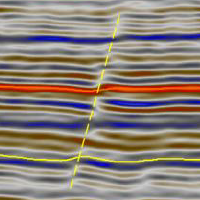 One operator has identified subsurface geological faults within his thermal bitumen scheme. These faults are conducting steam out of his formation and into other strata. Hoping to avoid flow-to-surface problems experienced by other operators, he has implemented a plan to detect, prevent and respond to steam out-of-formation events.
Help yourself to his analysis through the AppIntel AI self-serve, secure check out.
Get details of this cool tech Subscribers get them for freeLeveraging your competitor's efforts
Would you like to have the same regulatory approval as your competitor? When I ask this question, most operators say , "No. We want better!"
How do you know your competitor's approval without reviewing efforts and approvals?
?subject=Help me review new thermal bitumen schemes&body=Help me reviewing new thermal bitumen schemes%0D%0A%0D%0AMy Name:__________ %0D%0AMy Phone Number:__________ %0D%0A%0D%0A(Or call Proven Sales at 403-803-2500.)">Contact Proven for support. We keep abreast of all the new thermal regulations.
AppIntel AI is the quickest and easiest to discover industry advances on monitoring wells or maximum operating pressure or abandon non-thermal wells.
Mitigating flow-to-surface
One operator's field was the intense scrutiny of the regulator because of flow-to-surface events. It attracted at least three studies costing over $1 million.
In the end, the operator wasn't charged. The regulator decided that the operator had not done anything against the law. The operator had lived up to his commitments with the regulator.
Can you prove that you are living up to your regulatory commitments?
If you don't yet have a compliance index, you're behind the industry. Several other operators already have one.
A compliance index is a database of all the commitments you're made to the regulator. Operators use it to proven their operations are within bounds.
Proven completes these indexes for the industry. Because we have all the regulatory documents, we can quickly create your compliance commitment database.
?subject=Help me prove compliance to the regulator&body=Help me prove compliance to the regulator.%0D%0AHelp me start a compliance index.%0D%0A%0D%0AMy Name:___%0D%0AMy Phone Number:____%0D%0A%0D%0AType of project:__%0D%0A(Or call AppIntel Sales at 403-803-2500.)">Call Proven to start a compliance index.
Flow to surface research
Here are ten case studies related to flow to surface. It's not an exhaustive list, but through them you can see how other operators are dealing with the issue.
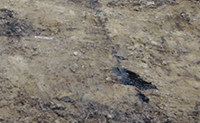 1. The regulator decides this operator is not at fault
Primrose had five reported locations where bitumen emulsion flowed to surface. The flows were not restricted to old wellbores but also seeped through poor cap rock seal due to natural and induced fractures. Mostly the blame for weakening the upper strata is on salt dissolution under the bitumen formation.
In their briefing to the media, the regulator said that the operator had been operating within their approval limits and the company has not been charged. However, injection restrictions were placed on some areas of the field.
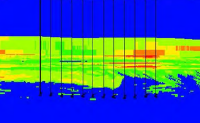 2. Where do you need lower MOP?
If there are areas in a scheme that demand lower injection pressures, it stands to reason that there are likely areas where a higher steaming pressure is justified.
That's how one operator viewed the MOP problem.
 3. Managing MOP
Soon after the AER's announcement of their study and decision about flow to surface, this operator decided to increase maximum operation pressure. He discusses differing pressures in several risk zones.
Slight surface heaves in steam operations are a given -- the AER doesn't seem concerned with that phenomenon.
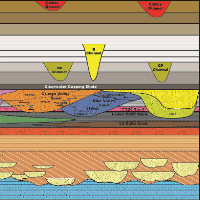 4. A geological assessment of flow to surface
After the regulator decisions regarding steaming and flow to surface, this operator has proposed a steam strategy -- and the regulator approved it. As expected, the strategy involves risk assessment of existing and abandoned wells. But in addition it considers geology, steam volumes and schedule, surveillance reaction protocols and remediation of high risk wells. Surveillance includes monitoring wells at several formations of decreasing depth.
?subject=I want just a few email alerts&body=Sign me up for a few email area alerts. %0D%0A%0D%0AMy Name:___%0D%0AMy Phone Number:___%0D%0A%0D%0AType of projects___%0D%0ACentered on this UWI___%0D%0ARadius proximity from there___%0D%0A%0D%0APricing: www.appintel.info/just-alerts/%0D%0A%0D%0A(Or call AppIntel Sales at 403-803-2500.)">Contact us now to buy just a few cheap and cheery email alerts.
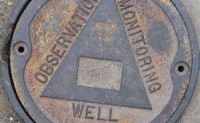 5. Verdict: This operator is not at fault
One operator proposed carefully increasing operating pressure in some areas of his thermal scheme. He proposed several mitigation strategies including surveillance wells. This use of observation wells is starting to grow in the industry.
 6. Using seismic technology to detect potential problems
The operator of this huff and puff project is using passive seismic systems to monitor casing failures. He hopes to identify any possible failures early to prevent flow to surface.
He includes a discussion of his technical and economic review to decide which pads should be monitored with passive seismic.
 7. Using the Formation Expansion Index
The industry wants to know: How do you prevent flow to surface associated with surface uplift. This case study contains a discussion of FEI (Formation Expansion Index) as a predictive indicator of when surface uplift might occur. It discusses the interplay of this with an associated gas cap.
Great reading for those who want to avoid such a flow.
 8. Flow to surface behind pipe
How do you evaluate the risk of flow to surface behind pipe? This application breaks down risk assessment into geological factors and wellbore factors. Both are discussed in detail.
A plan to gently steam taking these risks into account includes his steam schedule and wellhead injection pressures. He also discusses the early detection any trouble signs.
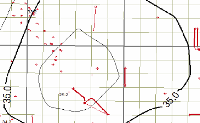 9. Disposal wells are more difficult to get approved
Surprise! New regulations make it harder than ever to get disposal and injection approved. Regulators now requires applicants review every abandoned well near a new disposal/injector well. The AER wants applicants to ensure that each well has been properly abandoned. This regulatory fall out is partly due to the flow-to-surface problems at Primrose.
Don't get caught by surprise like one operator who was out of the loop about the new "checking abandonment" rule. How would you how to handle such paradigm shifts without AppIntel AI?
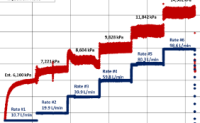 10. Disposal wells are more difficult to get approved
If you're wondering how to get a maximum well head injection pressure (MWHIP) increase, you'll want to look at this application. More than any other regulatory document, it traces the current process in determining maximum well head injection pressure from a step rate test.
MWHIP became a very big issue over the last few years when oil came bubbling to the surface in the Cold Lake area. Since that time, the march toward stiffer regulation of MWHIP has been steady.
We've given you ten case studies that refer to flow to surface and its impact on the industry. But as a bonus, here's one more. My cockney friend would be cheery if I told you that this one is legs-eleven.
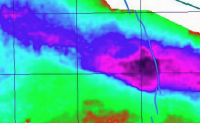 11. Flow to surface has shifted the regulatory paradigm
One operator's new thermal scheme was met with a request for information about cap rock faulting. The regulator requested 3-D seismic interpretation and other evidence.
Such a burden of evidence would not likely have been requested 5 years ago. But, because of recent flow to surface problems, it is much tougher to get these approved.
?subject=I want a cheap and cheery trial of AppIntel AI to search for thermal schemes&body=Sign me up for a AppIntel AI trial so I can to search for thermal schemes.%0D%0A%0D%0AMy Name:___%0D%0AMy Phone Number:____%0D%0A%0D%0APricing: www.appintel.info/short-term-search/%0D%0A%0D%0A(Or call AppIntel Sales at 403-803-2500.)">Contact us now for an AppIntel AI trial.
Tags: Seismic, Thermal, Compliance, Heavy Oil
 Granger Low Updated 6 Nov 2026





Did caprock really fail?
Managing steaming risk in thermal schemes

Safely steaming
Assessing geological and wellbore risk

Newest CSS limestone paradigm
Oil and gas avoids jagged AI intelligence

NCGI hits mainstream
Methane injection in every pad

AER's IAR is down
The OneStop application query is down.

Trust is currency. Ignore it and everything costs more.
AppIntel AI shows how to really prevent SAGD steam breakthrough

Bug floods are in fashion
Adjusting nutrients to grow microbes faster

Selfie-mail: emails to myself
I send more emails to myself than to any other person.

Stop overspending. Start making more oil and gas with AppIntel AI.
Yesterday’s skills are not enough. Here’s why you are still behind.

The secret to getting more: Heavy oil, tight rock, thin pay
Polymer flooding is the right niche for this difficult play

Winning at Natural Gas STORAGE WAR$
The real prize in gas storage comes back with the gas

Focus on bitcoin
Bitcoin mining with stranded gas

Bored already? Back to thermal school!
New idea: Working steam up the over burden

Absent salt cavern education?
Things you didn't learn in school about salt caverns

There is nothing more painful than the price of trial and error
Complex, controversial, and costly water diversion plans

Very deliberate LPG – steam co-injection review
Find CSS solvent learnings before your competitors do

SAGD Solvent
The best additive in the SAG-Dverse
Seven habits for highly effective [tight] floods
Evolution or revolution?

Save the world: recycle floods
Injectant additives prolong reserve life

CHOPS not dead?
Controversial revival trial shows why recent AI info matters

Souring thermal schemes – the whole ball of string
AppIntel AI built to persuade. Loaded with evidence.

Flowback water has a second life
Frack water is too expensive to waste

9 potent ways to enhance steam injection: SAGD
Methane, propane, solvent or surfactant?
 Calgary, Alberta, Canada

 Share